Evidence-Based Health Management Education

As we all know, many cuts will be happening across the board with health care and especially with Medicare. With the silver tsunami at our shores, people will not likely get the care they need. I see this over and over in the field. Once they get to a certain point, there are no follow ups until the next illness or injury.

I know that what we as OTs do have a huge impact on quality of life but delivering that care is hard to get covered by insurances from a preventative standpoint. We already have private insurers limiting the amount of therapy being covered in the home health setting. This is not good when so many need that extra follow up and ongoing maintenance care from a skilled therapist.

I can stand aside and complain about what I see or do something to address this issue. I’ve decided that I would like to step up and get involved to close this gap in care by starting my own private practice part-time.

I also have seen the gaps in services on the Windward side for addressing the needs of our seniors and will be starting a medical equipment rental service to fill that gap. If you’re in need of something, you can fill this form for more info.

Private and group consultations for ongoing evidence-based health and wellness education are available and you can send an inquiry via this form.

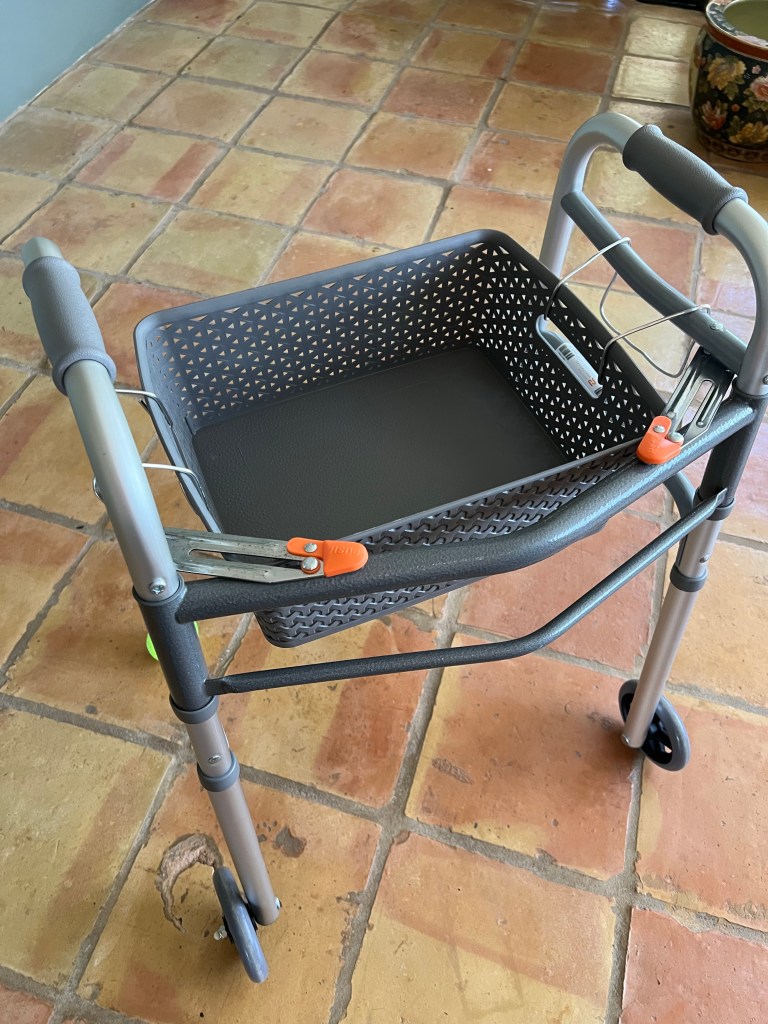
The Magic Walker Basket

In my work, I meet all kinds of people. One of the most challenging ones are those well into their 90’s who have lived alone for decades. They tend to be the most fiercely independent and stubborn.

I have one client who is adamant about living in her 4000 sq. foot home with some 14 stairs to get to the main living area. The environment itself limits her safety. She has been willing to use a walker with one upstairs and one on the first floor.

This lady was determined to not change her ways and refused safety interventions at eval because she felt ok. For me as an OT, I listen to where they are at and what they feel because you can’t change a person if they are not willing. Sometines their own choices lead to unintended consequences that will encourage change.

Living alone is not easy when your balance is off and you have a walker. I assessed how she was preparing her meals. She said she did not have to worry because her family would bring food, however, her family could not and hired a caregiver several days a week. She refused to eat what the caregiver prepared because she wanted food from her family.

Well, the unintended consequences of refusing intervention hit her 2 weeks ago. No one came over the weekend and she just could not prepare herself dinner or lunch. She simply could not read the directions from the frozen meal not carry to the microwave so she gave up.

When I came on Monday, she was fatigued and complaining of hunger. We tried to do a meal prep task with making toast and tea and she struggled to problem solve how to manage it. I mentioned to her a walker basket may help and that week she refused. I tried to educate on how it worked but once again, she resisted change. I finished making her breakfast and we sat and chatted about the situation.

The next week I came and she was once again hungry and tired. I could tell she was not feeling well being in that situation and she reluctantly agreed to trial my $6 basket. She was very resistant but said ok. I said I will leave it and she can decided herself. I also worked with the caregiver to make small bento meals in her refrigerator that will be easy to heat and eat.

Today I arrived at her home with her just beaming a huge toothy smile as I came in. She stated, “I like this basket you make me. I so happy I can make my food this weekend.”

She was so excited to tell me how she found her food and warmed it up and brought it to her couch to sit and eat. She said she found it so useful and was amazed how it helped her. She even said to tell the other therapists at rehab about it.

One week I had a hungry and tired client and the next week I had a happy well-fed client being a bit more safe and independent. It is amazing what a $6 gadget can do for a senior’s quality of life.

Lessons from the Field

Lessons I’ve learned in home health:

1) Don’t beat up your kids physically and emotionally. They will run far away from you.

2) Be grateful to the ones taking care of you, whether it be a friend, spouse, or child. Being kind begets kindness.

3) Being fiercely independent does not make you a better individual. It just makes you look unsafe and foolish.

4) You are not above the power of gravity.

5) Refusing to come to terms with your aging body does not keep you more continent. That drip here and there because you’ve missed the toilet all too many times really starts to smell.

6) We have choices in life. You can age with dignity or you can be stubbornly stupid. Pick your battles. The latter means you’d probably lose something along the way whether it be your relationships with your family or dignity.

Grace and Dignity

In my work, I hear so many people saying, “Getting old is for the birds.”

Aging is no easy feat as people live longer and face more health issues. Some get diseases and lose function over time whether it be cognitive or physical. To lose the ability to do things is devastating in a culture where we tend to focus on youth and independence.

We will hear on the news how Bruce Willis is suffering with dementia and Michael J. Fox has Parkinson’s disease. Yes, these conditions rob us of function but are we really wanting to define it as suffering? Do we want our lives to be ended in misery?

The more I see other families going through health issues, I have to ponder whether we as health professionals are using the right words when speaking with clients and families. I feel like we need to change the narrative to living with these conditions. Many people with chronic conditions can still live fulfilling lives so it is important that we focus on the “living” part of communication.

My Gramma Kamiya taught me a wonderful lesson as she lived with dementia in her latter years. She believed in the Okinawan term called Kajimaya, which meant a return to childhood. She recognized the need to change her ways as her function declined over the years.

Instead of fighting the change, she adapted. When her balance got worse, she willingly used a walker and even accepted a tub bench to bathe. She balked at first but once she was shown how to use it, she loved it. She lives pretty well until a very bad fall changed everything.

Despite the fall, she accepted getting care in Ann Pearl Nursing Facility and really blended in there. We thought she would want to return home after rehab but decided to stay because she realized she was safer there. Although it was hard for us to not have her be home, she thrived there.

Seeing her in a safe environment was a relief for our family. She had the care she needed and was loved by the staff there. Yes, she had dementia but I would not say she suffered. She lived with it and found moments of joy. To see her smile and laugh is heartwarming and I still can hear her laughing about how bad my dad was as a kid.

In my life, I hope that we really change our definitions and communication about aging in a more positive light to make that journey called life gentler and peaceful. Our journey should not be thought of as a war or battle to be fought with our end seen as a loss. The fact that our lives are filled with so many memories and friendships should be at the forefront of the journey.

Let’s making caregiving a journey to bring joy along the way and focus on meaning.

Tips for Keeping One Safe: Monitoring Devices

As loved ones age and experience declines in function, it is natural for us as care partners to want a way to monitor their whereabouts and activities when we aren’t home. Thanks to technology, there are many options available to use in the home.

1) Smart watches: There are several smart watches on the market that have fall detection and vital signs monitoring built in. If your loved one has a smart phone, you can pair the watch to it and use it as a monitoring device. It can also be voice activated to call for help also. Drawbacks about this is that many are water resistant but not waterproof and certain types of falls are not always detected.

2. Emergency alerting devices: Many know these as life alert systems that may have a console that is landline connected or cell connected with a pendant that can vary in size. Some pendants can be used in the community as they rely on a cell signal. These pendants are also waterproof can be worn 24 hours a day. Drawbacks include a larger pendant that is bulky or very hard to hear for the hearing impaired and it needs to be charged.

3) Motion detection Wi-Fi video camera: Much like the popular Ring camera devices, these camera are easily set up on Wi-Fi networks and come with a built in speaker. You can download an app to your phone and perform check-ins with your loved one during the day and can even set up motion alerts. Drawbacks include the feeling of no privacy and connectivity issues over the cell network can make the check-in slow at times.

5) Baby monitors: Some families opt to have baby monitors in bedrooms for night monitoring, especially if there is quite a bit of distance from the rooms. This is a cheap way to be able to hear what is going on and can almost be used as an intercom. Drawbacks include noise that can disturb the care partner’s sleep or not even hearing what may be happening.

These are just a few ideas that can help provide a sense of security for your loved one. Share your ideas on how you’ve kept your kupuna safe.

When a Parent is Hospitalized

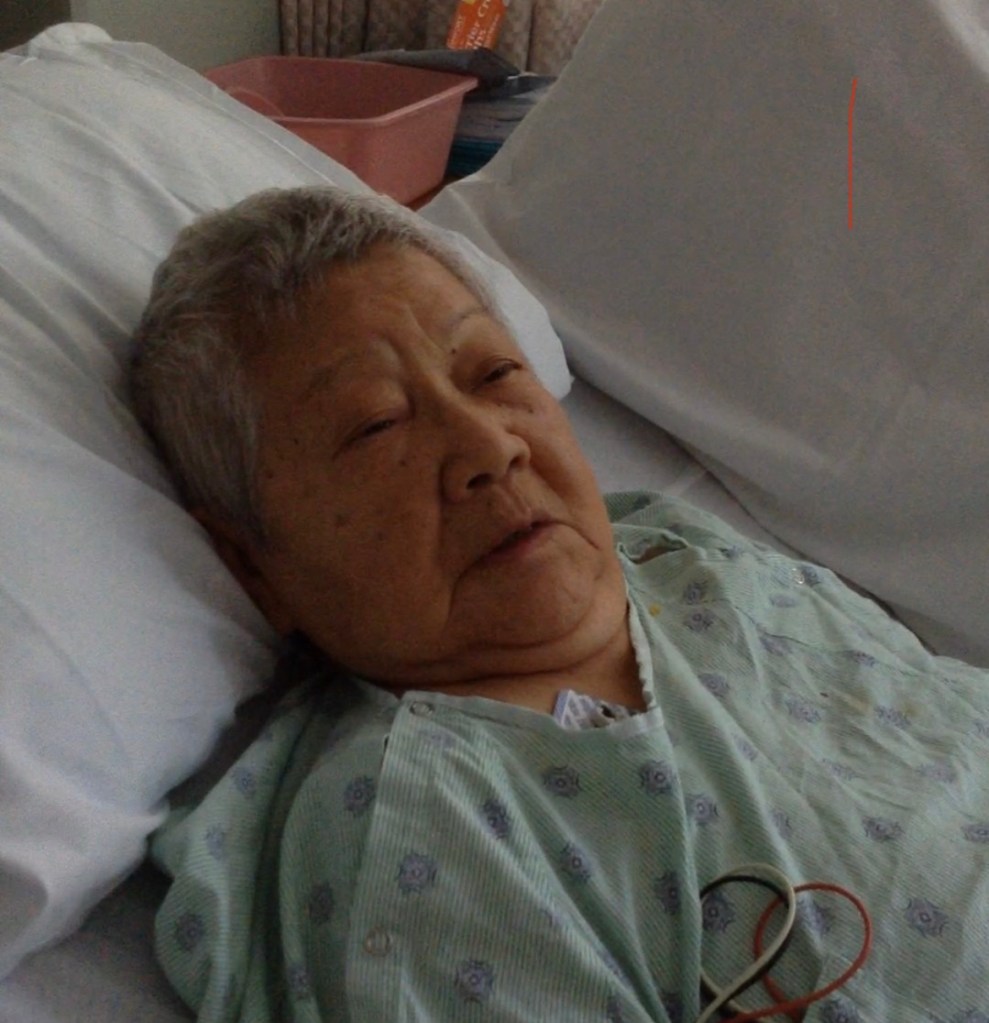
My grandma was hospitalized multiple times over the last several years of her life.

We are never prepared to think about the time when our loved one becomes ill and needs to be hospitalized. It may be a 4 hour ER visit then home or an admission for a few days. Physical function could be impacted and there tends to be little time to set things up to deal with that situation.

If there may be some medical issues following a hospitalization, the discharging MD may order home health services if it meets the criteria to be homebound.

  1. You need the help of another person or medical equipment such as crutches, a walker, or a wheelchair to leave your home, or your doctor believes that your health or illness could get worse if you leave your home
  2. And, it is difficult for you to leave your home and you typically cannot do so

If there is an admission with a qualifying stay, your loved one may qualify for a skilled nursing facility for further follow up. The requirements to get an SNF stay is linked here.

Should they need an SNF stay, following their discharge, then can be referred to home health services for further care and support with the transition home.

Note that Medicare does not cover custodial care costs. Custodial care is having a caregiver come in to assist with housekeeping and some self care tasks. This type of care typically comes from private home care agencies and requires and assessment prior to getting a caregiver.

Some people may have long term care policies that do cover custodial care needs, however they must qualify for it. They must need some degree of self care help in 2 areas and must complete a wait period where care is paid for privately for usually anywhere from 0-90 days or longer depending on the policy. There may also be specifics on what type of care is covered and limitations. General details on long term care policies are linked here.

This is a generalized summary of some of the info to know regarding possible issues that may arise when a parent or loved one gets hospitalized. I provide this info to help give you a guide on how to navigate the process to advocate for the best possible care.

Durable Medical Equipment

As people age, there may be a time when one will need a walker, cane, or wheelchair. Most people tend to go to the store and purchase one when they recognize the need for balance support.

Most insurance plans do cover physical and occupational therapy to help address balance changes. Therapy services are delivered under a physician’s order through an outpatient clinic if one is community mobile. If one is unable to leave the community and meet the homebound criteria, they can receive services in the home through a home health agency.

Medicare will cover some type of mobility device such as a front wheeled walker or a wheelchair. The coverage is 80% by insurance and the remaining 20% is the patient’s portion. Usually one device is covered every 5 years. Wheelchairs are rent to own for 13 months with the cost share spread over that time. A medical profession such as a PT or OT can help fit one for a wheelchair with a physician order.

Hospital beds can be covered by Medicare also under certain circumstances also. The usual bed covered is a semi-electric bed that has the head of bed and foot being controlled with buttons, however, the height of the bed must be adjusted by a crank.

Full electric beds that have all 3 adjustments need special justification to have it covered. You can upgrade a hospital bed by paying a difference for the added feature.

Hospital beds also come in different heights in addition to the standard height. This is an important feature when caring for someone who may crawl out of bed unassisted and fall. One can request for an extra low type of frame to help reduce fall risk.

It is always best to check that you are getting properly assessed and trained for the piece of durable medical equipment (DME) before accepting it. Also, be sure to keep all paperwork for the DME should it have problems or need to be repaired or changed out.

DME such as commodes or tub and shower chairs are not covered by Medicare as it is considered hygiene equipment. There are special criteria needed to get coverage and consulting with your insurance can help guide you.

Dealing with Incontinence

Let’s face it, this is a topic few want to talk about. Your loved one gets sick and goes to the hospital for care. They come home and whoa, things are not the same. In the hospital there are certified nurses aides providing care around the clock and when you get home, it is only you. Few family caregivers have any training on how to manage this issue.

Some of our loved ones will learn how to deal with it by going earlier to the toilet but then there are some with cognitive deficits that will say they do not need to go. Maybe they can feel the urge but delayed mobility creates leakage. Medications can also create a recipe for disasters too. Incontinence management is a huge problem that leads to long term placement if that is an option.

Over my years of caring for my grandma, I’ve learned that in the transition from hospitalization or rehab, there tends to be inconsistent or little addressing of this issue. Oh, the loved one can walk and transfer from facility care, but, they can’t even manage their own toileting. You, the caregiver, is left in the dark in figuring this out, mostly by trial and error.

Occupational therapists are the perfect professional to help assess what is going on with your loved one’s change in condition. We focus on self care tasks that have been impacted by health changes and can integrate the medical issues with the need to adapt or modify the task.

Here are some suggestions that may be helpful. Consult an OT for a more thorough assessment to create the best interventions.

Can’t make it on time?

When mobility changes, the urge and mobility to get to the toilet may not sync. Sometimes a timed toileting may be helpful in preempting the urge. Going before the urge hits may help with getting there on time. Sometimes a bedside commode can be helpful to have a toilet nearby, especially at night.

Constipation

Constipation is yet another issue faced by so many caregivers. When it happens, the reaction is to do things to get the pipes moving again. However, knowing the right concoction can be tricky because it leads to loose bowels in some cases. A better alternative is to figure out how to create a bowel management routine through medication, hydration, and diet.

Bladder Infections

UTIs or urinary tract infections is yet another common issue found in the elderly population that adds to the caregiver burden. Assessing hygiene issues, hydration, and continence to determine what may be contributing to the problem can help to prevent it from starting.

There may be range of motion or coordination issues with one’s upper extremity altering how hygiene is performed. Maybe it is cognition where they cannot detect that they are having leakage leaving them in soiled pads or briefs. Many factors can contribute to these infections

The Caregiver Transition

Many of us are never prepared to take care of our loved ones. We never think to plan what needs to be done when their health deteriorates over time or when there is an accident.

I’ll be the first to admit that I did not want to think about my grandparents getting old. I wanted to have them live in the same way as I knew them growing up as a kid. They aren’t going to fall. They won’t get sick. I wanted so much to believe in the fairytale of lifelong wellness. Then reality hits you out of the blue.

My grandpa was the first to get sick with chronic kidney failure and anemia. He was fortunate to live decently to the age of 82. He was still walking and traveling. He died of a heart attack while on a trip to Reno. I had always dreamed that I would be his caregiver but that never came to fruition with his sudden passing.

Little did I realize that I would be the caregiver to my grandma. She was a fiercely stubborn and independent person who did not want to be old. She got upset when she was told she’d be a grandma at age 45! That all changed when I arrived. I was the apple of her eye and because she respected me, I became her caregiver as she aged. She refused to listen to my mom, her own daughter, or any other grandkid.

I fell into the role of caregiver with her. I had years of hands on elder care and learned how to address her multiple health issues. Although she never wanted a caregiver and believed she was independent, life has a funny way of role evolution. She and my grandpa helped me over the years with grad school and getting moved to the mainland. They were my support along with my parents to help me get on my feet so I felt I needed to be there for them.

When my grandparents started needing help doing the things they wanted to do like traveling, I was there for them. I remember have my Aunty Ruth, Uncle Aki, Grandpa Hee, and Grandma Hee in wheelchairs at the Reno airport. Because there were no porters, I would wheel them 2 at a time to the gate. It was hard work but I didn’t want them to fall from fatigue during their travels.

I would even brave Chinatown with my grandma in a wheelchair, a five year old clinging on the back of the wheelchair, and toddler in a baby backpack so Grandma could eat dim sum and go jade shopping there. She really enjoyed doing those outings so I felt the effort was worth it.

As I’ve learned through so many clients, there is always one family member who pulls through to be the caregiver. It can be very lonely to become the sole person in the role. There are rare moments where multiple family members share the load but that is few and far between. That is why caregivers do need to seek support through this journey.

I had this belief that I was going to be the everything for my grandma. She landed up getting very sick with bronchitis in May of 2010. She had been coughing and refusing to see her doctor because it was just smoker’s cough.

The cough got worse to the point of making her urinate all over her living area. I was 9 months pregnant with a nose of a hound dog who could smell the urine. I would slowly lower myself to wipe up the puddles and disinfect everything. Within a few days, I was feeling like baby was coming and sure enough, she came a month later.

The house I had left was all clean before I went to the hospital. When I came home 2 days later, everything was soiled again. I landed up changing baby diapers and adult ones day after day for my entire maternity leave. I do not know how I did that. I now realize that I should’ve gotten help instead if trying to do it all. Hindsight is 20/20.

Everything was a blur during that time because of the situation. We had many wars to get her to wear the briefs to the point of me having to steal her underwear and replace it with briefs. There was a ton of frustration but once she realized that there was no more panties, she acquiesced to using the Depends.

Sometimes we don’t want to upset them and get frustrated with their poor insight. Sometimes we have to step up and be that caregiver to improve the insight for everyone’s well being.,
Navigating the Sea of Elder Care

When I first became an OT working out in the field, I gained a first hand view of the many issues that caregivers had to deal with in elder care. I had many patients with dementia, heart disease, diabetes, lung disease, and other mental health issues. On a daily basis in my work, I saw how hard it was to address these multiple issues but was fortunate that after 8 hours of work, I could go home. That all changed when economics created a change in the caregiving environment.

My first job out of school was at a neurobehavioral unit right when the Silicon Valley had an exodus of care workers going yo tech jobs and as a result, the OT sometimes had to pick up the responsibilities of the nurse aides. There were times when I’d report to work at 5 am to get residents cleaned up and ready for breakfast. I was responsible for about 11 residents who needed brief and clothing changes to be up for breakfast.

Many of these residents were not the nice and sweet old folks you see in the movies. There were many times where I’d get spit at or cussed out. Sometimes they’d even swing a fist at us or even pull out a hand covered in BM from a brief. It was way dirty work that was not suited for the faint of heart. Trying to provide basic care was tough work and it was only the start of the day.

Once the morning routine was done, it was time for feeding them. I’d be pushing meal carts out and passing trays to the residents. Next it was supervising and feeding those who were unable to feed themselves. We had to watch them as some would steal their neighboring table mates’ meal if we were not paying attention. Some would dump food on the floor if they didn’t like it. Between supervising the meal and feeding them, I did have janitorial duties to prevent slips and falls in the dining room.

Following the breakfast, it was time to toilet residents and get them to the activities that I’d run until lunch time. The meal and toileting routine would be followed by them getting down for naps or another group for activities that I would run. Sometimes I would have to load residents into a wheelchair van and drive them to their appointments around the Bay Area in peak traffic.

There were days I’d work over 16 hours a day to cover the care needs of these folks. I’d work from early AM until they went to bed and this would go on for several weeks at a time. It was super hard work mentally and physically. There was no time for me to care for myself.

That job really taught me what it is like to be a caregiver. Long, hard, thankless days of work was grueling and took a toll on my own personal life. These days are unbelievably demanding that few who have been in this role can understand.

My roles have changed over the years and have given me many opportunities to learn about this vast sea of elder care issues. I hope that these blog posts can help caregivers navigate through their journey.